Your finishing line is old and unreliable, or you’re growing and need more capacity — but you can’t just shut the line down to fix it. That’s the question GAT gets asked most often by manufacturers already running a finishing line: retrofit this equipment or replace it? And either way, how do we do it without stopping production?
GAT has answered both questions for real customers, not hypothetically. This page walks through the decision framework, what a staged install actually looks like, and three documented projects — a modernization, a capacity expansion, and a VOC-driven line replacement — with the real specs and results from each.
Retrofit or Replace: The Decision Framework
Old or unreliable finishing equipment doesn’t always mean a full line replacement. GAT’s own breakdown of the highest-leverage upgrades for a busy job shop covers five areas, in order of what typically cuts the most downtime first:
- Automated spray guns for consistent coverage — fewer rejects, less rework, less wasted paint from overspray.
- Upgraded filtration to stop contamination before it causes finish defects (dust nibs, fisheyes, orange peel).
- Efficient transfer pumps matched to your coating’s viscosity — less wasted material, less strain on the equipment.
- Smart control systems for real-time monitoring — see a problem before it ruins a batch of parts, plus remote diagnostics that get a technician troubleshooting before they even arrive on-site.
- Reliable fluid handling — hoses, fittings, and delivery lines built for your specific chemistry, so clogs and leaks stop being the reason a line goes down.
Read the full retrofit-vs-replace breakdown →
The pattern across all five: most of what’s killing your uptime today doesn’t require tearing out a working line. It requires knowing which components are actually the bottleneck.
Staged Cutover: Modernizing Without Stopping Production
The question underneath “retrofit or replace” is almost always the same one: what happens to production while this is happening? GAT’s answer, in plain terms:
“We stage work to minimize downtime; many lines install in segmented areas without full shutdown.”
And for the parts of a retrofit that touch your existing line directly:
“Rarely [does production need to stop]. Our team works around your shifts and hot zones to minimize disruption.”
This isn’t unique to new-build installs, either — GAT routinely retrofits and maintains third-party washers, ovens, and conveyors when they’re being integrated into a GAT line, not just its own equipment.
Automation & Controls: Modernizing the Brain, Not Just the Hardware
A modernization or capacity project is also usually a controls upgrade, whether that’s the point of the project or a side effect of it. GAT engineers PLC intelligence into every washer, oven, conveyor, and booth it builds or retrofits — Ethernet/IP, Profinet, or Modbus TCP protocol compatibility, VFD-controlled motors that adapt takt time automatically, and centralized alarm/data logging instead of separate HMIs per subsystem.
What that delivers in practice, from GAT’s own documented results:
- >98% mechanical uptime, when paired with GAT’s recommended PM schedule and diagnostic logging.
- Up to 15% faster troubleshooting, from remote PLC access and real-time alarms forwarded directly to maintenance teams.
- Zero color-change delays, from smart powder-room interlocks that confirm reclaim airflow is ready before a changeover starts.
Read the full controls & automation breakdown →
Proof: Real Modernization & Capacity Projects
Three real GAT customers answered exactly this question — retrofit an aging line, add capacity, or replace a line that had hit a hard limit — with a GAT-engineered system. Full details on each linked below.
Setina — Modernizing an Aging Batch Line
Setina Manufacturing, an aftermarket law-enforcement transport-security manufacturer in Olympia, WA, needed to replace an aging batch powder process line with an automated two-coat line — enhanced pretreatment via an in-line blast system, a five-stage wash process, and lower labor cost per unit without sacrificing finish quality.
GAT engineered a full turnkey system: an in-line blast system, a five-stage Zirconium Deposition pretreatment washer with GAT’s own “By-Pass Evaporator” technology, a convection dry-off oven, an over/under prime-gel process, a bottom-entry convection cure oven, two powder booths in a combined powder room, and a 3” monorail conveyor — processing parts up to 3’W × 4’H × 6’L and 300 lbs at 6 fpm. Setina turned the old batch-system bottleneck into a pull system, with the new line running ahead of production and assembly rates.
Santa Rosa Systems — Adding Capacity Without Losing Quality
Santa Rosa Systems (SRS), a Louisville, KY manufacturer of conveyor and material-handling systems, needed a new powder coating line to keep up with rising customer demand — without sacrificing finish quality or supply-chain reliability.
GAT built a custom automated three-stage line: an aqueous pretreatment washer, a convection dry-off oven, an automated powder booth with reclaim capability, and a convection cure oven — handling parts up to 5’W × 5’H × 26’L and 5,000 lbs. The result, in SRS’s own words:
“The new line has given us the ability to blow our old system’s throughput out of the water. Every day, we paint the equivalent of 6 to 7 daily shifts worth of parts compared to our old powder paint system thanks to the line that we designed with GAT.” — Santa Rosa Systems
Throughput improved 300% against the old system.
Read the full Santa Rosa Systems story →
Tracker Marine — Replacing a Line That Hit a Hard Limit
Tracker Marine, an OEM boat manufacturer in Lebanon, MO, needed to replace an antiquated wet paint line that had reached VOC emissions limits — and used the forced replacement as an opportunity to also improve operating performance, finish quality, and reject rate.
After a year of process development, GAT engineered a line supporting three separate powder colors on the same boat: a three-stage aqueous pretreatment washer, a convection dry-off oven, three hybrid gel processes, three powder booths in a single large powder room, a final convection cure, and a custom power-and-free conveyor — handling boats up to 8’W × 5’D × 26’L and 2,000 lbs.
Read the full Tracker Marine story → — or watch the line in action, with full transcript and chapters.
Get Started
Every one of these projects started with the same conversation: what’s actually limiting your line today, and what does the path to fixing it look like without stopping production. GAT’s consultation is free, with no obligation.
Can you retrofit my existing conveyor or oven instead of replacing the whole line?
Will production need to stop during a retrofit or capacity add?
Will production stop completely during install?
Can you service or integrate with equipment GAT didn't originally build?
Related Reading
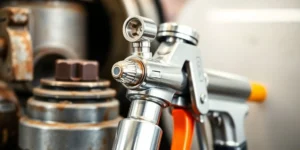
Retrofit or Replace? Paint Finishing Equipment Upgrades That Cut Downtime in Busy Job Shops
The full breakdown: automated spray guns, filtration, transfer pumps, smart controls, and fluid handling — which upgrades cut the most downtime.
READ MORE »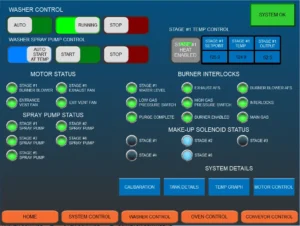
PLC Controls & Automation: Building an IIoT-Ready Finishing Line from Day One
The full engineering breakdown of GAT's controls philosophy: protocols, IIoT features, and real results from GAT-controlled lines.
READ MORE »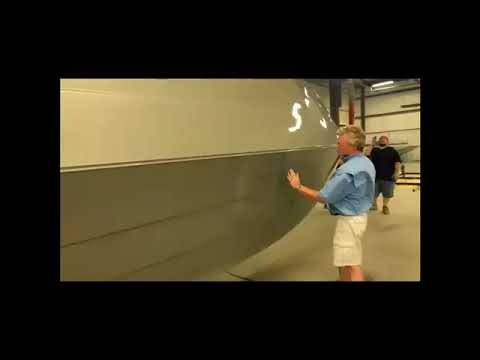
Tracker Marine Video: Powder Coat Line in Action
Watch the line GAT engineered for Tracker Marine's replacement project, with full transcript and chapters.
READ MORE »